

Neuro-Physiology of Strength: The Brain-Muscle Interface
Introduction Before delving into the complexities of strength training, it is crucial to recognize that strength is first and foremost a...
 By Marouan Ariane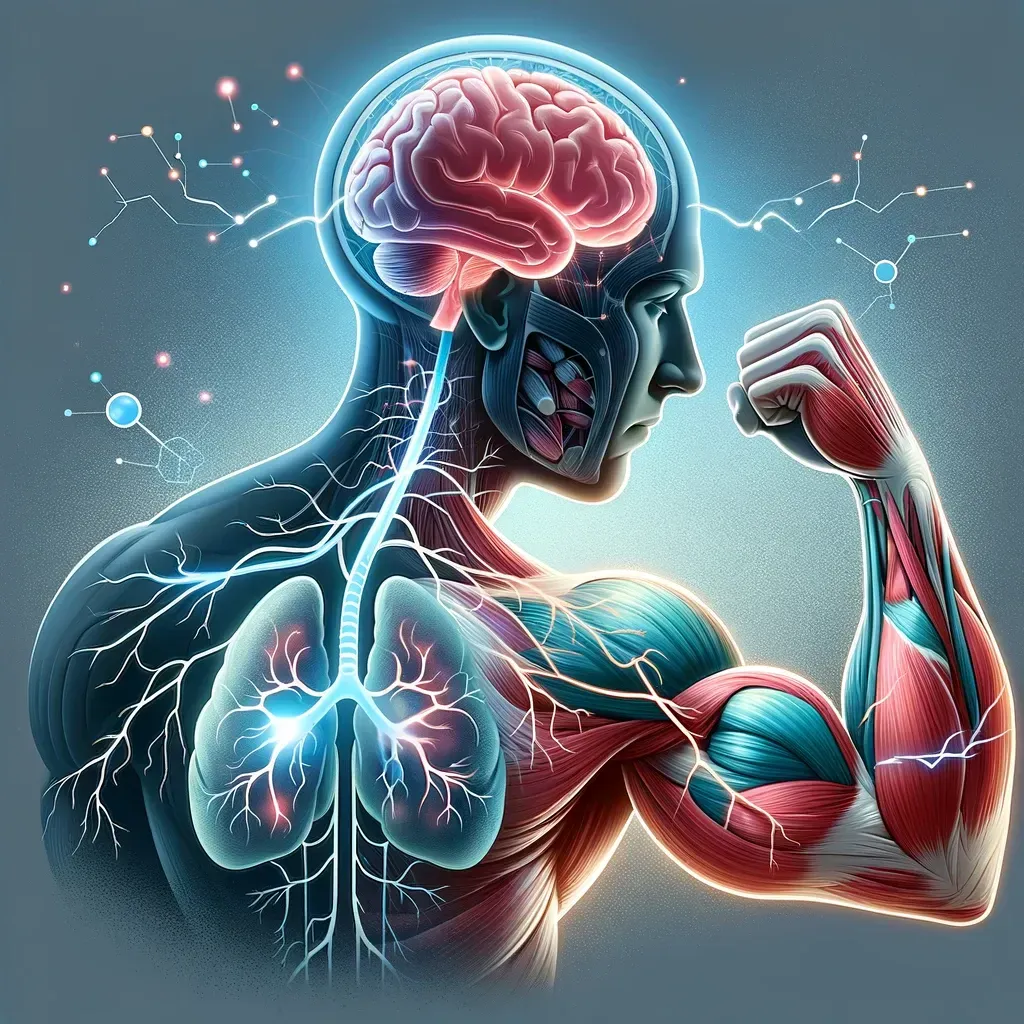
Athletic strength should not be perceived as a mere contractile capacity, but as the result of neurological signaling efficiency. Before being a physical attribute, strength is a manifestation of the power of the nervous flow directed towards the sarcolemma.
1. The Motor Unit: The Vector of Power
The development of strength is based on the Motor Unit (MU), the basic element of motor control. A MU includes an alpha motoneuron and all the muscle fibers it innervates.
- Central Command: The motor cortex generates an electrical impulse that travels through the spinal cord to the neuromuscular junctions.
- Henneman's Size Principle: Recruitment follows a strict hierarchy. The organism first activates the small MUs (type I fibers, less powerful but more enduring) before soliciting the large MUs (type IIb fibers, highly contractile), essential for maximal strength.
2. Neurological Adaptation: The "Gain" of the Beginner
When a novice starts a strength program, the spectacular gains of the first few weeks are not due to hypertrophy (tissue growth), but to neurological optimization.
The "Break-in" process includes:
- Improved Recruitment: The brain learns to mobilize a greater percentage of available MUs simultaneously.
- Coding Frequency: Increased discharge frequency of nerve impulses allows reaching the physiological tetanus (maximal fused contraction).
- Synchronization: MUs learn to contract together rather than in a scattered order, increasing the resulting force for the same muscle volume.
3. The Psychological Factor and the Lifting of Inhibitions
The body has safety mechanisms, like the Golgi tendon organs, which limit contraction to avoid tendon avulsion.
The role of the mind: Intrinsic motivation and concentration (external focus) act on the central nervous system to temporarily lower these protection thresholds. Successful strength training consists in "re-educating" the brain to allow access to its reserve strength, which can go from a standard recruitment of 60% to more than 90% in the elite athlete.Synthesis of Strength Mechanisms
| Component | Physiological Action | Impact on Strength |
|---|---|---|
| Motor Cortex | Generation of the electrical signal | Intention and intensity of the effort |
| Motoneuron | Transmission of the nerve impulse | Reaction and contraction speed |
| Muscle Fibers | Sliding of actin/myosin filaments | Production of mechanical tension |
Conclusion: From Connection to Action
Understanding that strength is a neurological skill changes the perspective of training. For the beginner, the challenge is not to "pump up" their muscles, but to build an ultra-fast neural highway between their brain and their fibers. Mastery of movement and mental intention are the foundations on which muscular mass will subsequently be built.
About the Author
Share this article with your friends and community