

Lactose intolerance: between myths and reality!
Lactose is a natural sugar present in milk and dairy products. It is abundant in breast milk and is a source of energy for infants. However, some individuals may have difficulty digesting lactose, which can lead to symptoms such as bloating, gas, and d...
 By Marouan Ariane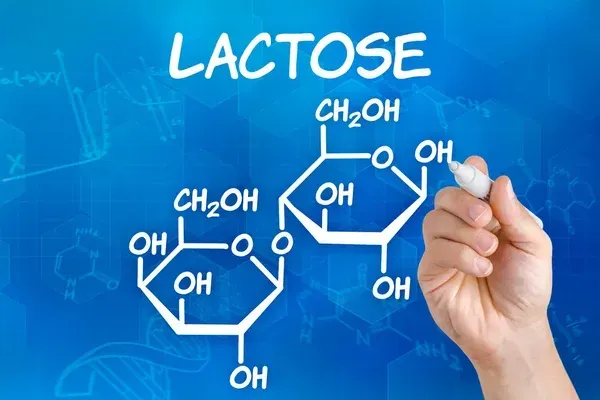
Lactose is the main disaccharide in milk, composed of a molecule of D-galactose and a molecule of D-glucose linked by a beta-1,4 glycosidic bond. Its hydrolysis requires lactase-phlorizin hydrolase (LPH), an enzyme located on the brush border of intestinal enterocytes.
Lactose is not intrinsically harmful. For an individual secreting sufficient lactase, it constitutes a preferred energy substrate and promotes the absorption of calcium and magnesium. Complications only occur when enzymatic activity is insufficient to saturate the ingested lactose load.
The Three Etiologies of Lactase Deficiency
The pathophysiology of intolerance manifests in three distinct forms:
- Primary hypolactasia (Non-persistence of lactase): This is the most common form, governed by the polymorphism of the LCT gene. Lactase production physiologically decreases after weaning. This phenotype varies by ethnicity (very common in Africa and Asia).
- Secondary (Acquired) intolerance: Results from an alteration of the intestinal mucosa (celiac disease, Crohn's disease, acute gastroenteritis). The deficiency is often reversible once the underlying pathology is treated.
- Congenital deficiency (CLD): An extremely rare autosomal recessive disorder where lactase is absent from birth. It requires total and immediate exclusion of lactose, otherwise severe dehydration may occur.
Pathophysiological Mechanisms: The Colonic Cascade
In the absence of hydrolysis in the small intestine, unabsorbed lactose migrates to the colon, creating a draw of water through osmotic pressure. The colonic microflora then takes over through anaerobic fermentation, producing gases and short-chain fatty acids (SCFA). These metabolites are what induce bloating, cramps, and the osmotic laxative effect.
Tolerance Thresholds and Nutritional Strategies
Intolerance is not an "all or nothing" rule. The majority of individuals with malabsorption can tolerate about 12g of lactose in a single dose (equivalent to 250ml of milk) without major clinical symptoms, particularly if ingested during a complete meal that slows gastric emptying (Savaiano, 2014).
Reference Contents in Food:
| Food (Standard Portion) | Lactose Content (g) | Expert Note |
|---|---|---|
| Cow's milk (240 ml) | 11 - 14g | Maximum recommended load per serving. |
| Plain yogurt (200g) | 4 - 9g | Better tolerated thanks to ferments (self-digestion). |
| Hard cheeses (Cheddar, Parmesan) | 0 - 2g | Virtually lactose-free (eliminated in the whey). |
| Whey Concentrate (30g) | ~1.8g | Negligible residual content for most people. |
| Whey Isolate (30g) | < 0.5g | Total safety for severe intolerant individuals. |
Safety and Scientific Evidence
The scientific literature confirms that lactose is a safe nutrient for tolerant individuals and a manageable substrate for mild intolerant ones:
- Heyman (2006): Stresses that unjustified elimination of dairy products can lead to calcium and vitamin D deficiencies (Link).
- Szilagyi (2015): Demonstrates that gradual exposure can promote an adaptation of the colonic microflora, improving tolerance over time (Link).
- Savaiano (2014): Validates the "self-digestion" mechanism of lactose in yogurt via L. bulgaricus and S. thermophilus bacteria (Link).
Conclusion: Overcoming the Nocebo Bias
The controversy around lactose is amplified by a confusion between enzymatic intolerance and cow's milk protein allergy (CMPA), which is an IgE-dependent immune reaction. In the absence of clinical diagnosis, the total elimination of lactose often stems from a nocebo effect. As athletes, the goal is to optimize nutritional intake without experiencing discomfort: favor isolates or fermented products to benefit from the nutrients in milk without the osmotic constraints.
About the Author
Share this article with your friends and community