

Warming up, an essential step
Many practitioners often neglect this essential part of training. A good warm-up guarantees performance and...
 By Marouan Ariane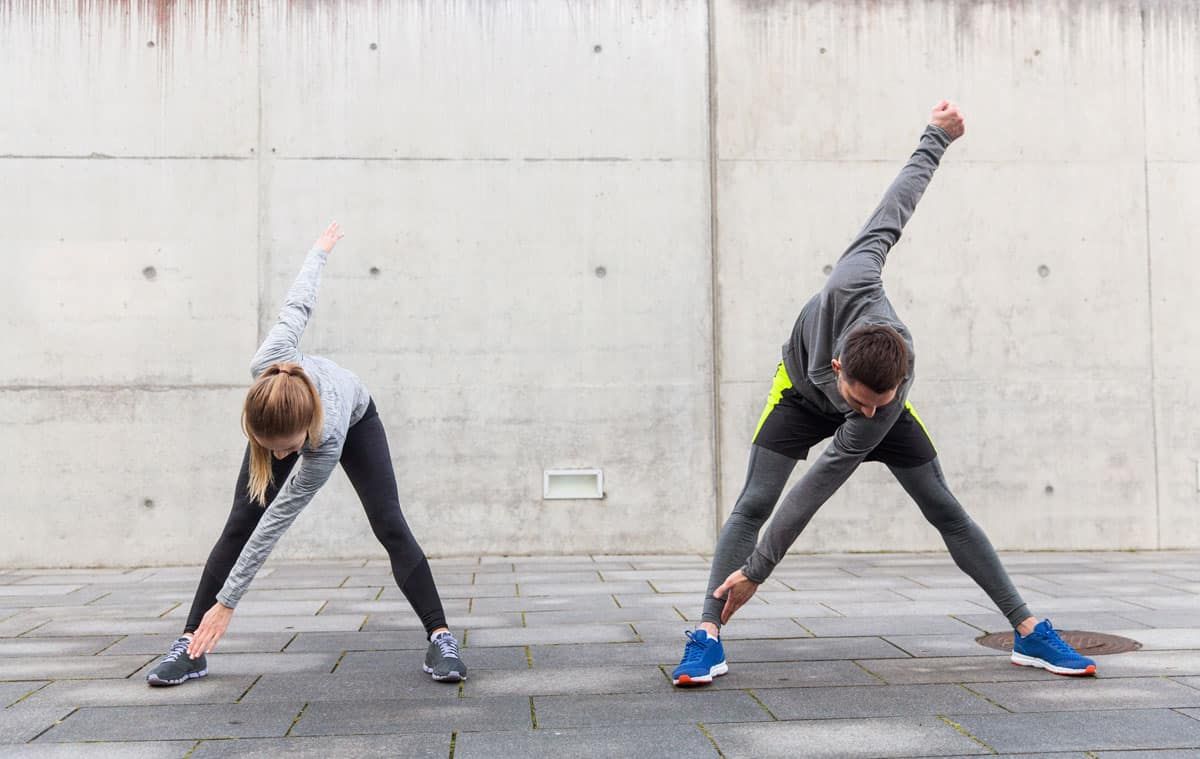
1. Global Thermogenesis Phase (5-7 minutes)
The primary objective is to raise the core and intramuscular temperature. This thermal increase triggers several beneficial cascades:
- The Q10 Effect: For each additional degree Celsius, the speed of enzymatic reactions (particularly myocardial and muscular ATPase) increases by nearly 10%, accelerating ATP resynthesis.
- The Bohr Effect: The increase in temperature and the local decrease in pH shift the hemoglobin dissociation curve to the right, facilitating the release of oxygen to the solicited myocytes.
- Viscosity Reduction: It decreases the internal resistance of muscles and vessels, optimizing the fluidity of movement.
2. Joint Mobilization and Synovial Rheology (5 minutes)
Joints are avascular structures that depend on movement for their nutrition. This step mechanically prepares the joint interfaces for shear and compressive stresses.
- Synovial Thixotropy: Synovial fluid is non-Newtonian; its viscosity decreases under the effect of movement (liquefaction). This reduces intra-articular friction and protects the hyaline cartilage.
- Pumping Lubrication: Low-intensity movements promote the diffusion of nutrients from the synovial fluid to the chondrocytes.
- Ligamentous Elasticity: Warm-up increases the compliance of tendons and ligaments, allowing better management of elastic energy (stretch-shortening cycle).
3. Specific Neuromuscular Potentiation (5-10 minutes)
This phase leaves the general framework to focus on the kinetic chains that will be solicited during the session (e.g., empty snatches before power work).
- Motor Unit Recruitment: The goal is to "wake up" the alpha motoneurons and improve nerve conduction velocity.
- Post-Activation Potentiation (PAP): Performing specific movements with progressive load induces phosphorylation of myosin light chains, making the muscle more sensitive to calcium and thus increasing immediate contractile force (Tillin & Bishop, 2009).
- Selective Vascularization: Creation of a local hyperemia to saturate the target muscle capillaries with nutrients and hormones.
N.B.: The Paradox of Static Stretching
As an expert, it is imperative to emphasize that prolonged static stretching (>30 seconds) is prohibited before a strength or explosive effort.
- The "Stretch-Induced Force Deficit": Passive stretching temporarily reduces the stiffness of the musculotendinous unit, which alters the force transmission capacity and decreases neural performance (Behm & Chaouachi, 2011).
- Injury Risk: By "anesthetizing" the muscle spindles (sensory organs of tension), static stretching can distort proprioception and increase the risk of tearing during a heavy load.
- Alternative: Favor dynamic stretches (controlled ballistic) that maintain temperature and activate contraction reflexes.
Conclusion: The Warm-up as a Performance Tool
The warm-up is not a waste of time, it is the arming of your biological engine. In 15 to 20 minutes, you go from a resting state to a state of maximum metabolic availability. A RAMP (Raise, Activate, Mobilize, Potentiate) protocol is the signature of an athlete who bets on science to dominate their sport and last over time.
- Fradkin et al. (2010) - Effects of warming-up on physical performance: a systematic review.
- Tillin & Bishop (2009) - Factors modulating post-activation potentiation and its effect on performance of subsequent explosive activities.
- Behm & Chaouachi (2011) - A review of the acute effects of static and dynamic stretching on performance.
About the Author
Share this article with your friends and community